Learning outcomes
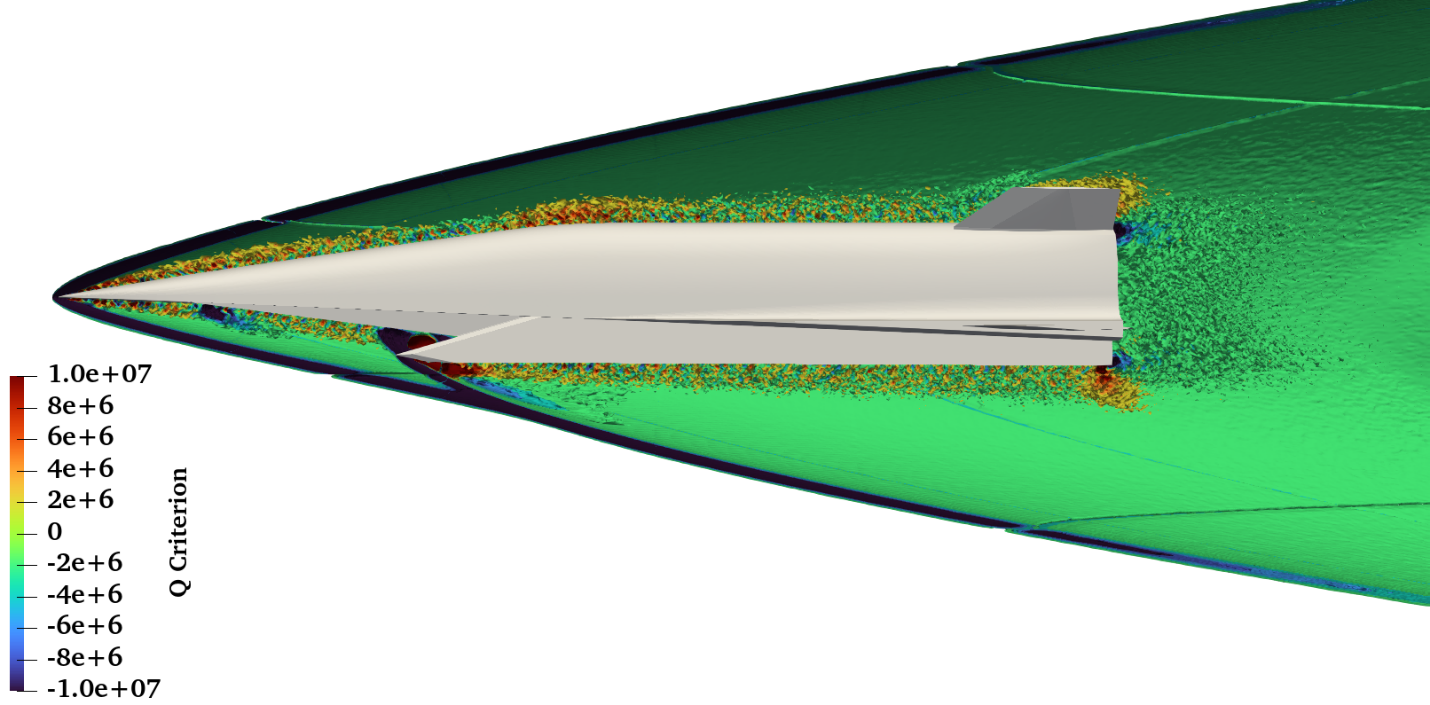
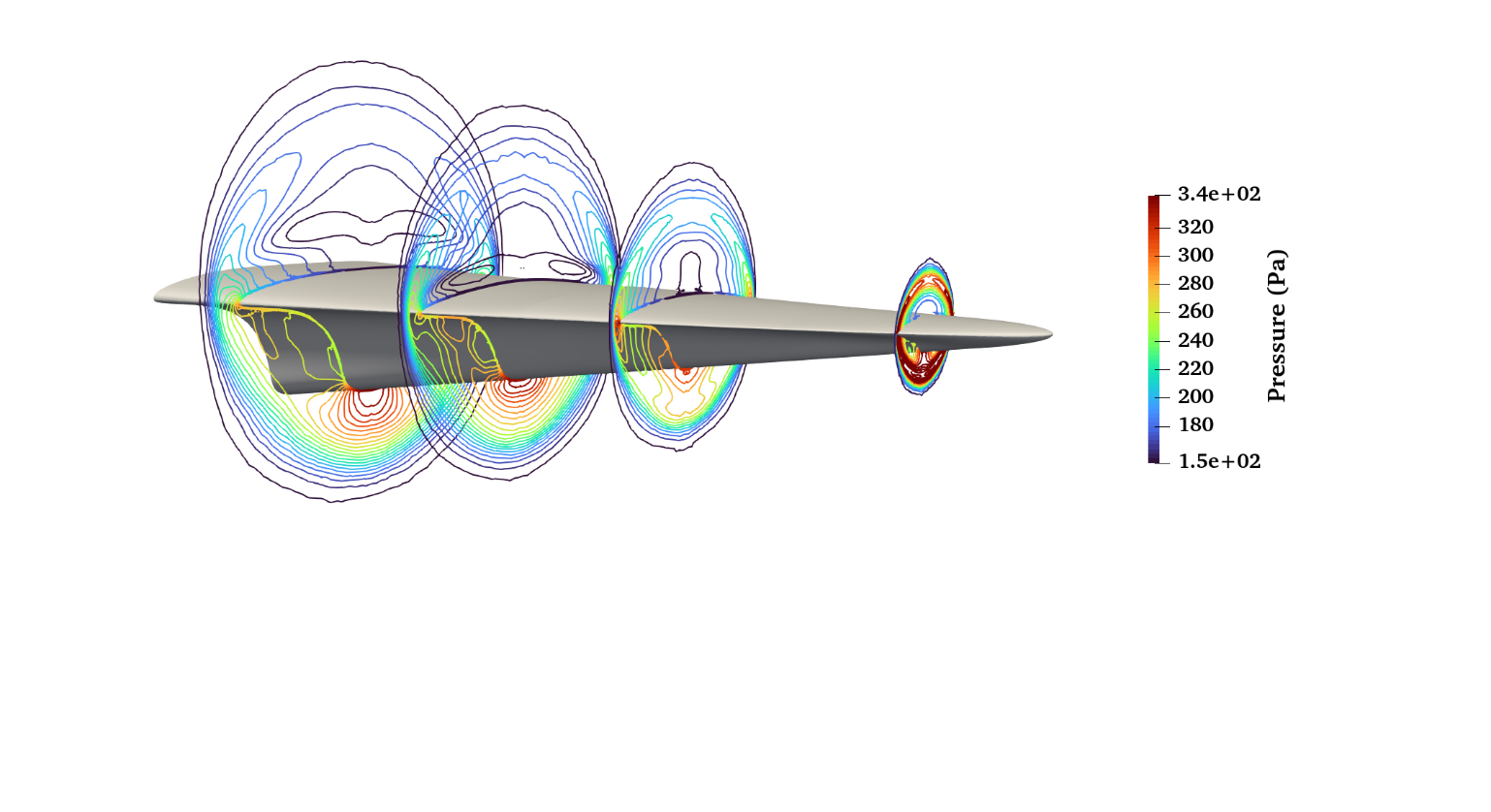
At the end of the course, attendees will have developed basic understanding of how hypersonic vehicles work, how they can be used for aerospace applications and what is required to design and simulate them. Practical exercises will offer students hands-on experience with CFD simulations of hypersonic flow over a cone and the basics of waverider geometry generation.
Target Audience and Prerequisites
It is expected that attendees will have a basic understanding of space systems as well as compressible fluid mechanics and aerodynamics. No prior knowledge of CAD or CFD is required. Instructions on the installation of the required software will be provided on the website. It is expected that registered attendees will have installed the required (open source) software on their private laptops ahead of the meeting.
Related Bibliography
-
J.D. Anderson, Hypersonic and High Temperature Gas Dynamics, 3rd edition, AIAA publishers, 2019. eISBN: 978-1-62410-645-3. https://arc.aiaa.org/doi/book/10.2514/4.105142
-
J. Blazek, Computational Fluid Dynamics - Principles and Applications, Elsevier, 3rd Edition, 2015, eBook ISBN: 9780128011720.
-
C. Hirsch, Numerical Computation of Internal and External Flows, Vol. 1, 2, John Wiley and Sons, New York, 1990.
-
E.H. Hirschel, Basis of Aerothermodynamics, 2nd edition, Springer publishers, 2015. https://link.springer.com/book/10.1007/978-3-319-14373-6
-
C.B. Laney, Computational Gasdynamics, Cambridge University Press, 1998, ISBN: 978-0-521-62558-6.
-
R.J. LeVeque, Numerical Methods for Conservation Laws, 2nd edition, Springer, 1992, ISBN 978-3-7643-2723-1.
-
L. Piegl and W. Tiller, The NURBS Book, Springer-Verlag, 1995.
-
J.F. Thompson, B.K. Soni, N.P. Weatherill (Eds.), Handbook of Grid Generation, CRC Press, 1999, ISBN 0-8493-2687-7.
-
E.F. Toro, Riemann Solvers and Numerical Methods for Fluid Dynamics - A Practical Introduction, 3rd edition, Springer, 2009, e-ISBN 978-3-540-49834-6.
Program Structure
The first day...