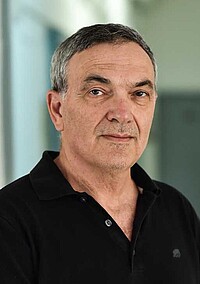
Joseph Z BEN-ASHER
Professor, Department of Aerospace Engineering, TECHNION - Israel Institute of Technology
Biographical Data
1977 – B.Sc. – Aeronautical Engineering, Technion, Israel Ins. of Technology, 1977. 1986 – M.Sc. and Ph.D. – Aerospace Engineering, Virginia Tech (VPI&SU), 1986 and 1988, respectively. 1988 – Adjunct Lecturer, Electrical Eng. – Systems, Tel-AvivUniversity. At the Technion since 1998. Full professor in Aerospace Engineering since 2008. Holder of the Lena and Ben Fohrman Chair in Aeronautical Engineering.
Main areas of research
Systems engineering, missile guidance, ballistic missile defense, optimization techniques, optimal control theory, flight dynamics and control, flexible structures dynamics and control.
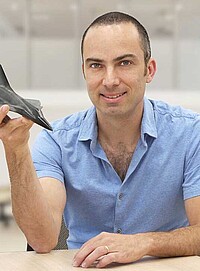
Michael KARP
Assistant Professor, Department of Aerospace Engineering, TECHNION - Israel Institute of Technology
Biographical Data
BSc, 2007; MSc in the direct doctoral track, 2013; PhD, 2017 in Aerospace Engineering, Technion. Postdoctoral fellow at the Center for Turbulence Research at Stanford University, 2017-2020. At the Technion since 2020.
Main areas of research
His research focuses on theoretical and computational investigation of flow physics, with emphasis on transition to turbulence. His aim is trying to explain complex phenomena using a minimal number of elements. His research interests include aerodynamics, fluid mechanics, flow instabilities and transition, flow control and flight mechanics.
Vassilis THEOFILIS
Professor, Department of Aerospace Engineering, TECHNION - Israel Institute of Technology
Education:
1984 BSc Physics, U Patras, Greece
1988 MSc Applied Mathematics and Fluid Mechanics, U Manchester, UK
1991 PhD Aeronautical Engineering, U Manchester, UK
1991-96: Post-Doc Dept of Applied Mathematics, U Twente, Netherlands
Awards:
1997 Alexander von Humboldt Fellowship, DLR Göttingen, Germany
2003 Ramón y Cajal Senior Research Fellowship, U Politécnica Madrid, Spain
2018 Ludwig Prandtl Memorial Lecture, T U Munich, Germany
His interests lie in the understanding, prediction and control of physical mechanisms underlying laminar flow linear and nonlinear instability and laminar-turbulent transition from the incompressible to the hypersonic regime. In his early career he pioneered theoretical/numerical developments to address instability of flows with multiple inhomogeneous spatial directions based on the continuum flow equations. Motivated by increased global interest in hypersonic flow physics phenomena, in recent years he has turned his attention to the intersection of statistical and continuum descriptions of hypersonic flows in the upper stratosphere and lower mesosphere and employ integrated theoretical and experimental methods to advance fundamental flow physics knowledge, paving the way for next-generation flight vehicles.
Deborah LEVIN
Professor, The Grainger College of Engineering, Aerospace Engineering, University of Illinois Urbana-Champaign
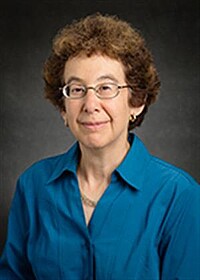
Education
PhD Chemistry, California Institute of Technology, 1979
BS, Chemistry, State University of New York at Stony Brook, 1974
Academic Positions
Research Professor and lecturer, Department of Chemistry, George Washington University, May 1998-August 2000
Associate Professor, Department of Aerospace Engineering, The Pennsylvania State University, August 2000-June 2007
Professor, Department of Aerospace Engineering, The Pennsylvania State University, June 2007-August 2014
Professor, Aerospace Engineering Department, The University of Illinois at Urbana-Champaign, August 2014-present
Other Professional Employment
Research Staff Member, Task Leader, Institute for Defense Analyses (IDA), Science & Technology and Systems Evaluation Divisions, 1979-May, 1998
Research Areas: Combustion and Propulsion, Computational Fluid Mechanics, Hypersonics, Nanosatellites, Space Systems
Pedro PAREDES
Dr., NASA Langley Research Center, Hampton, VA, USA · Computational AeroSciences Branch
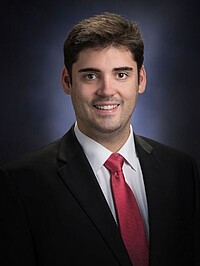
Dr. Pedro Paredes is a National Institute of Aerospace (NIA) Senior Research Engineer. He works in the Computational AeroSciences Branch at the NASA Langley Research Center in Hampton, VA. Dr. Paredes received his Ph.D. and M.Sc. in Aerospace Engineering from the Polytechnic University of Madrid. The research activities of Dr. Paredes are related to boundary layer transition (BLT) prediction and physics-based development of technology concepts for BLT control across the flight speed regimes.
Christian STEMMER
Prof. Dr.-Ing. habil., Chair of Aerodynamics and Fluid Mechanics, TUM School of Engineering and Design, Technical University of Munich

Alexander WAGNER
Dr., Head of the DLR Department of High Speed Configurations Göttingen, Niedersachsen, Germany
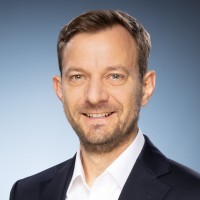
Angelos KLOTHAKIS
Dr., School of Production Engineering & Management, Technical University of Crete

Dr. Angelos Klothakis is a researcher with the Turbomachines & Fluid Dynamics Laboratory, Technical University of Crete, Greece. He earned his Diploma in Production Engineering and Management in 2012, received his Master's Degree in Production Systems in 2015, and his PhD in 2024 with a thesis entitled "On the Solution of High Mach Number Flows." From 2020 to 2023, he contributed to a collaborative project between the University of Illinois at Urbana-Champaign and the University of Liverpool, focusing on the multi-scale modeling of unsteady shock-boundary layer hypersonic flow instabilities, a project funded by the Office of Naval Research. Since 2023, he has been involved in an international project with NATO’s Integrated Air & Missile Defence Centre of Excellence (IAMD CoE), exploring hypersonic programs and their potential applications in surveillance. Dr. Klothakis has co-authored one book and 24 scientific papers, and he is an active member of the AIAA Society.
Ioannis NIKOLOS
Professor, School of Production Engineering & Management, Technical University of Crete
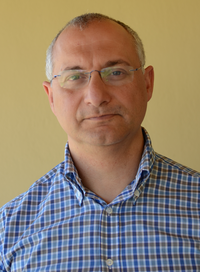
Dr. Ioannis K. Nikolos, Mechanical Engineer (Diploma: 1990, Ph.D.: 1996, National Technical University of Athens), is a Professor with the School of Production Engineering & Management, Technical University of Crete, Greece, Director of the Turbomachines & Fluid Dynamics Laboratory (TurboLab – TUC), and Director of the Postgraduate Program in “Product Design & Manufacturing”. He has more than 30 years of experience in R&D projects funded by the EU, the Industry, and the Greek State. He has coordinated more than 40 R&D Projects, while he participated as a researcher in 13 additional ones. His research work is in the fields of Computational Fluid Dynamics (CFD), Aerodynamics & Gas Dynamics, Turbomachinery, Computational Engineering, Engineering Design Optimization, and Traffic Flow Modelling. He has co-authored one patent family, three books and one e-book, 65 journal papers and book chapters, more than 120 conference papers and 16 posters. His work attracted more than 3950 citations. He is a member of AIAA, and IEEE; he has served as a Guest Editor and Associate Editor for ASME Journal of Fluids Engineering, as an Associate Editor for ASME Open Journal of Engineering (AOJE), and as a Guest Editor for International Journal of Advanced Intelligence Paradigms (IJAIP), for Advances in Engineering Software (ADES), and for Water.